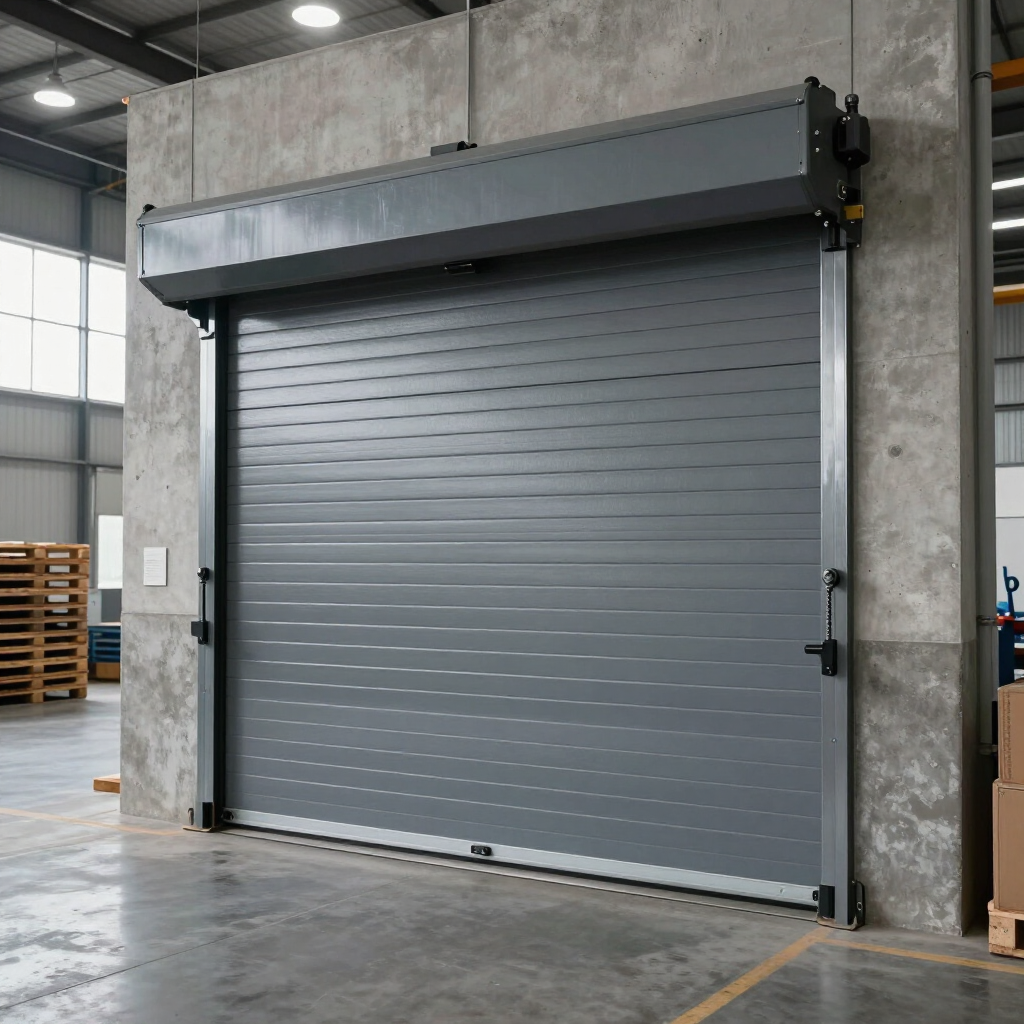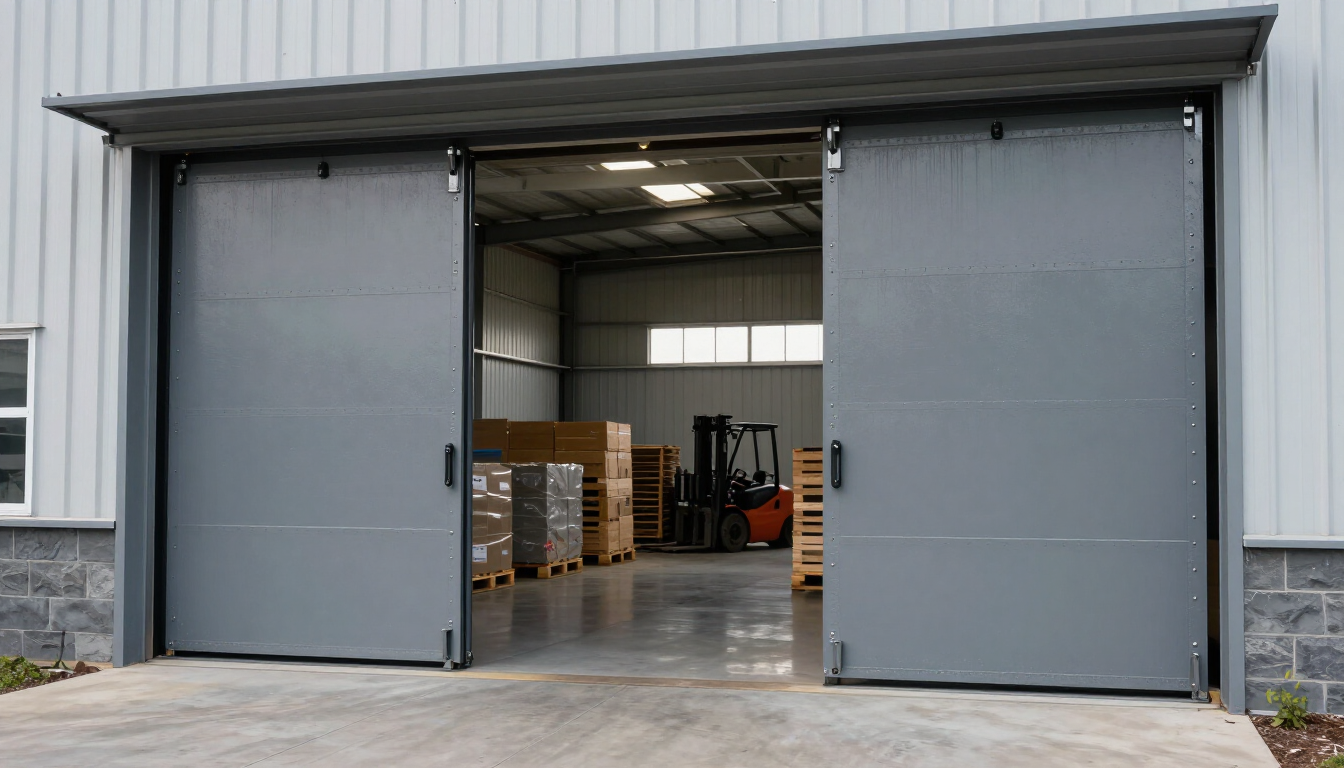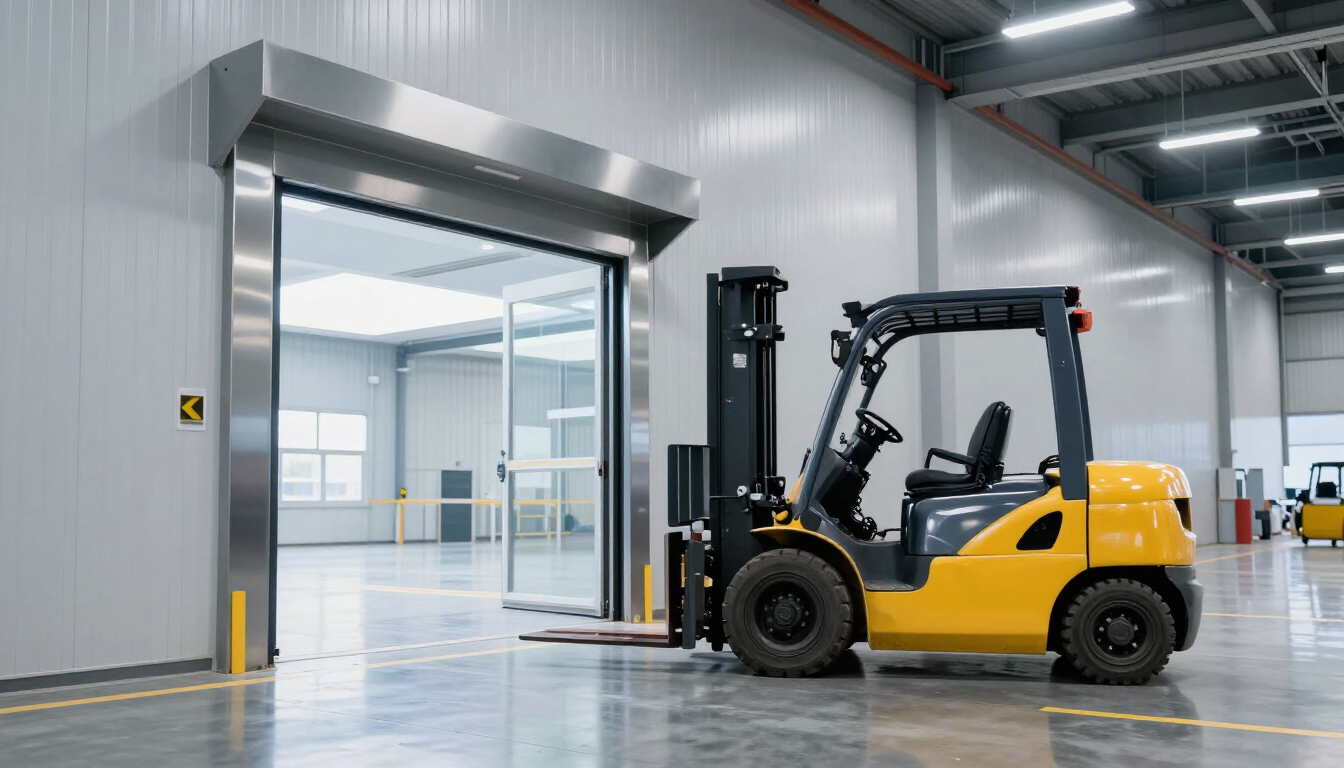

Fire shutters spend most of their lives doing nothing visible. That is exactly the point. When they are specified correctly, commissioned properly and maintained on schedule, they contain fire and smoke, protect escape routes and support the building's wider fire strategy. When they are not, they become a compliance liability and a point of genuine vulnerability.
This guide is written for compliance-focused managers who need clear, practical direction rather than vague reassurance. It covers how test standards translate to real products, what fire ratings actually mean, how activation and fire panel interfaces work, and what your obligations look like after installation. There is also a short section answering common service questions about roller doors to help you build a maintenance plan that holds up to scrutiny.
What the Test Standards Actually Prove
Two families of standards appear most frequently on specifications.
BS 476 Part 22 is a legacy British Standard that assesses the fire resistance of non-loadbearing elements. You will still encounter it on older estates and in some existing certification, so it is worth understanding.
BS EN 1634-1 is the current European test method for fire resistance of door and shutter assemblies. It is paired with EN 16034 for product performance and marking, and it is what most modern specifications will reference.
For day-to-day decision making, both routes answer the same core question: did the shutter assembly maintain a defined integrity period under furnace test conditions? Under BS EN 1634-1 the result is typically presented as E for integrity, or E/EI where insulation is also assessed. Most fire-rated roller shutters are integrity-only solutions.
Always ask for the actual test report or extended application document that covers your specific opening size, mounting method and any vision panels or pass doors. If the configuration you need is not covered by the documentation in front of you, it is not compliant to treat it as though it is.
Typical fire ratings run from 60 minutes to 240 minutes. Four-hour shutters exist for high-risk zones, plant rooms and major compartment lines, but correct support steelwork, fixings and fire-stopping are all essential to achieving the stated performance once the shutter is in the building.
Activation, Control and Interfaces With the Fire Panel
A fire shutter has one job in an alarm condition: close reliably. There are three common approaches to making that happen.
Fusible Link
A heat link releases at a set temperature, allowing gravity closure. It is simple and independent of mains power, but it does not integrate with the building fire alarm and can be slow to react if the fire plume does not reach the link quickly.
Local Detection With a Control Panel
Sensors at the opening signal a dedicated shutter controller to drive a safe close. This is faster and more predictable than a fusible link, but it depends on local detectors being correctly positioned and kept in good working order.
Full Fire Alarm Integration
The building fire alarm panel provides a monitored signal to the shutter controller. For multi-zone sites this is the most robust option, enabling staged closure logic and central supervision of faults across the estate.
In practice you will often combine a monitored signal from the fire alarm with a gravity-fail-safe drive and a calibrated descent speed control. Anti-fallback safety brakes should be in place, and where powered closure is used, safety edges or light curtains need to be appropriately disabled in alarm mode so that closure is not blocked by non-life-safety devices.
Your fire strategy should define whether the shutter sits on an escape route. If it does, you may need hold-open and controlled descent with manual override under specific conditions. Document this at design stage and verify it at commissioning.
CE and UKCA Marking: What It Means on Site
Since the UK's departure from the EU, UKCA marking has become the domestic conformity route for relevant construction products. Many fire shutter systems were historically CE marked under EN 16034. Today you should expect to see one of the following:
CE marked products placed on the GB market during permitted periods, supported by valid documentation, or UKCA marked products backed by approved body certification against EN 16034 and related standards.
The marking confirms the product family has been assessed. It does not replace your obligation to install to the tested configuration and keep the system maintained so that performance is not gradually compromised. Keep declarations of performance, test reports and installer commissioning records together in one place, ready for audits and insurance reviews.
Commissioning, Certification and the First Drop Test
A compliant installation ends at commissioning, not at the last fixing. Handover should include verification of the opening size, support steelwork and fixings against the tested detail, function tests in both normal and alarm conditions including local manual release, a calibrated descent speed check, and confirmation of gravity-close or fail-safe operation.
Where powered operation is present, force and safety device tests should be completed and recorded. The fire interface with the building alarm panel needs to be tested directly, not assumed. The shutter should be labelled with its rating, a unique ID and the service schedule, and commissioning and compliance certificates should be issued along with wiring diagrams and operating instructions.
A witnessed initial drop test should be recorded and retained. This becomes the baseline against which every future periodic test is measured.
Planned Testing and Ongoing Maintenance
Post-installation obligations sit with the dutyholder. In workplaces, doors and shutters are work equipment, which means the Provision and Use of Work Equipment Regulations apply. The practical outcome is a planned maintenance system with clear records.
Typical service frequencies are at least annual for low-use workplace doors, and six-monthly for high-use, high-risk or mission-critical shutters. An additional drop test should follow any repair affecting suspension, braking or control, regardless of where it falls in the scheduled cycle.
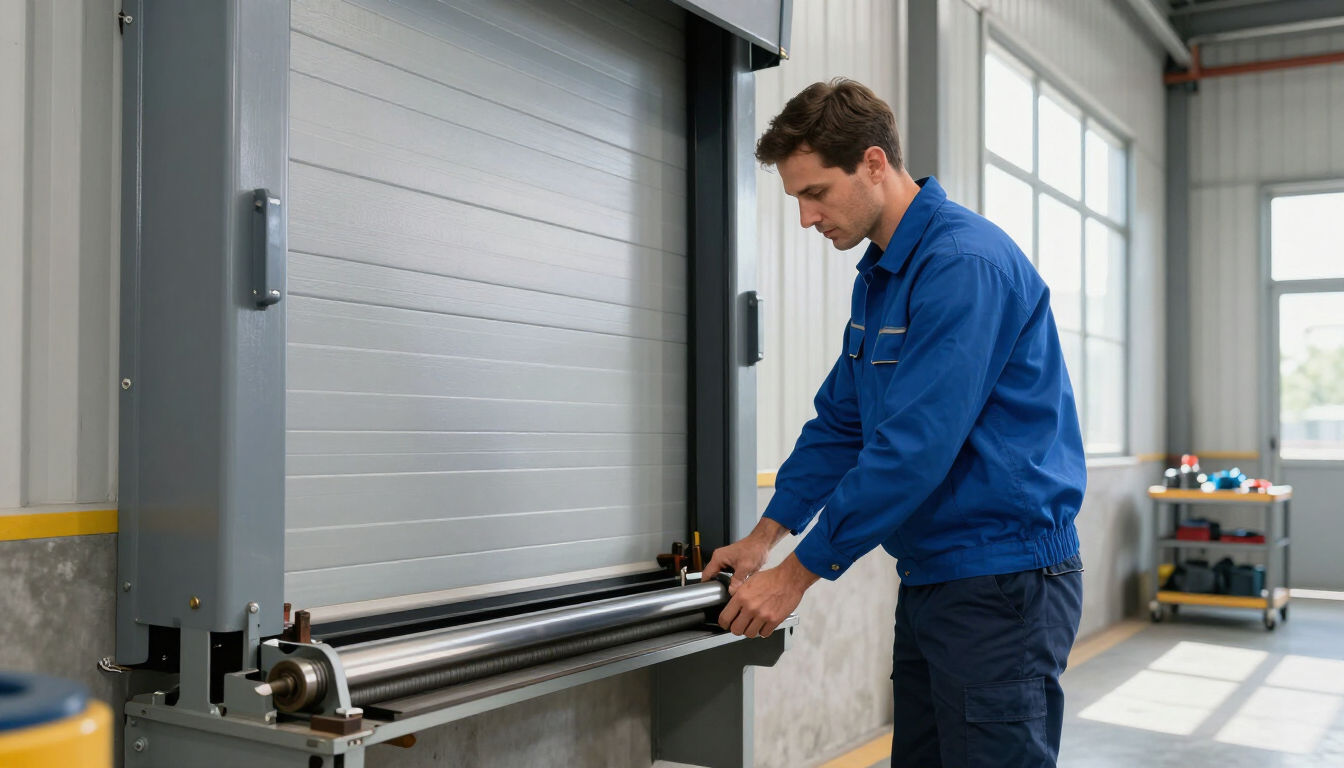
A service visit normally covers cleaning guides, inspecting laths and endlocks, checking bearings and fixings, testing safety brakes, verifying manual release, exercising the alarm interface, confirming descent speed and issuing a service report with any remedial actions noted. Where automatic operation is present, calibrated force testing should be completed and documented each time.
If you manage a mixed estate, a grouped schedule that aligns fire shutters, high-speed doors and sectional doors reduces downtime and keeps documentation manageable. Tridoor provides bespoke planned schedules and 24/7 emergency cover across South Yorkshire, with stocked vehicles aimed at first-visit fixes wherever possible.
Specification Notes That Prevent Problems
A few practical points that consistently save time and cost when addressed early.
Compartmentation should drive shutter placement, not installation convenience. Check headroom and supporting structure before anything else. The power-off state needs to be defined explicitly: for alarm conditions that remove mains power, specify gravity-close or a separate supply so the shutter will still descend when it needs to.
Access for cleaning and maintenance deserves attention at design stage. Grease and debris in guides can slow descent in ways that are not immediately obvious. In food or pharmaceutical environments, finishes and seals need to tolerate washdown without trapping contaminants.
Keep documentation live after handover. Every modification or control change should be followed by updated records. If a controller is swapped out, repeat the interface tests and refresh the certificate set before considering the work closed.
Frequently Asked Questions
How do you service a commercial roller door?
A competent engineer should clean guides, inspect laths, endlocks, shafts and bearings, check fixings and brackets, test safety brakes and anti-fallback devices, verify manual overrides, test controls and safety edges or beams, confirm descent speed and balance, lubricate to the manufacturer's specification, and document all results with a remedial action list.
How often should a roller door be serviced?
Annual servicing is the minimum in workplaces. For high-use, high-risk or operationally critical doors, six-monthly is the widely recommended standard. After any major repair or impact, arrange an additional inspection and drop test before returning the door to normal service.
What is the difference between a commercial door and a residential door?
Commercial doors are built for frequent daily cycles, heavier loads and larger openings. They use industrial-grade motors, controls and safety systems, and typically integrate with site systems such as fire alarms and access control. Residential doors are lighter, designed for lower cycle counts, and focused on aesthetics and quiet operation. The maintenance obligations and regulatory requirements are substantially different.
When to Involve a Specialist
Bring an industrial door specialist in at concept stage for any opening on a compartment line or near an escape route. Early involvement prevents clashes with steelwork, services and sprinkler heads, and confirms that the tested configuration can actually be achieved in the space available.
Tridoor's engineers design, manufacture, install and maintain fire-rated roller shutter doors across South Yorkshire, commissioning and certifying to the relevant standards with clear documentation for audits. If you need help auditing existing shutters, planning replacements or setting a drop-test diary, our team is based in Barnsley and covers the wider region.
For related systems on your estate, take a look at our guidance on roller shutter doors and the range of industrial doors we manufacture and service locally. If your project includes hinged fire door sets, our South Yorkshire fire-rated door options help maintain compartmentation consistently across the whole building.
Summary and Next Steps
Fire shutters are only as reliable as their evidence, their interfaces and their upkeep. Specify against BS EN 1634-1 or BS 476 Part 22 with documentation that matches your exact build configuration. Choose activation and alarm integration that fits your fire strategy. Commission thoroughly with a witnessed drop test. Then maintain a planned schedule with records that can withstand an audit.
If you want a practical, audit-ready plan, request a compliance survey and drop-test schedule from Tridoor. Our team operates across South Yorkshire with end-to-end capability, from survey and manufacture in Barnsley through to installation, certification and round-the-clock maintenance support.