
High Speed Door Maintenance: Servicing Schedules, Common Faults, and How to Reduce Downtime
High speed doors are built for busy sites. They open quickly, they close reliably, and they help keep people and vehicles moving without turning every doorway into a bottleneck. When they work well, you barely notice them. When they start to fail, everyone notices. Loads back up, temperatures drift, hygiene zones get compromised, and safety risks rise fast.
That is why high speed door maintenance is not a nice-to-have. It is an operational control. It protects uptime, keeps traffic flow predictable, and reduces the chance of a door failure causing an incident, a missed dispatch, or a production delay.
This guide explains what high speed door maintenance includes, how to set a servicing schedule that matches your usage, what warning signs to watch for, and what a good maintenance provider should deliver. It also shows how Tridoor supports planned maintenance and repairs for high speed doors and wider industrial door estates, with engineering support based in Barnsley and strong Yorkshire coverage.
Why high speed door maintenance matters in real operations
A high speed door is not just a door. It is part of a process. It sits between workflows, zones, and risks. When it is out of service, the knock-on effects rarely stay contained.
Uptime and workflow impact in warehouses and production
Warehouses and production sites rely on predictable movement. Forklifts, pallet trucks, pickers, inbound deliveries, and outbound dispatch all depend on doors opening when expected. A door fault can force traffic to reroute, increase congestion, and create waiting time that spreads across the shift.
When a door stops closing properly, people improvise. They prop it open. They disable safety features. They use an alternative route that was never meant to handle that flow. This is where small faults become bigger operational problems.
Planned maintenance reduces the chance of reactive work at the worst possible time. It also means faults are often found early, when a small adjustment or component replacement is enough.
Temperature control, hygiene zoning, and energy loss
High speed doors are often installed to support temperature control, reduce draughts, and protect controlled environments. In cold storage, food processing, and clean manufacturing, the door is part of the boundary. If the seals degrade, if the curtain tracking is poor, or if closing speed slows, you can lose the performance you paid for.
Energy loss can be a slow leak. You may not see it on a single day. Over time, it shows up in heating and cooling load, frost risk, condensation issues, or a zone that never quite stays stable.
Maintenance protects that performance. It keeps seals effective, ensures the door closes correctly, and helps the drive system operate at the designed speed.
Safety risk and why faults escalate quickly
High speed doors move quickly by design. That means faults can become safety issues faster than with slower doors. A misaligned curtain can snag. A sensor issue can cause nuisance stops or unsafe behaviour. A damaged edge can create sharp points or unexpected movement.
In workplaces, powered doors are part of equipment safety. Maintenance and safety checks help reduce risk by ensuring safety systems are working properly, and the door behaves as intended.
How planned maintenance reduces emergency callouts
Reactive repairs are expensive in ways that do not always show on the invoice. There is the obvious cost of the callout, parts, and labour. Then there is downtime, disruption, temporary measures, and the risk of repeated faults.
Planned maintenance changes that equation. It reduces the frequency of breakdowns, helps you budget more predictably, and allows repairs to be scheduled around the site rather than forcing the site to adapt to the repair.
Tridoor’s Maintenance and Repairs service is positioned around this practical approach, supporting ongoing upkeep rather than one-off fixes.
What high speed door maintenance includes
A proper maintenance visit is not a glance and a signature. It should be a structured inspection and service process that covers mechanical condition, drive and controls, and safety function. The exact checks vary by door type, usage, and environment, but the intent is consistent: identify wear early, restore performance, and confirm safe operation.
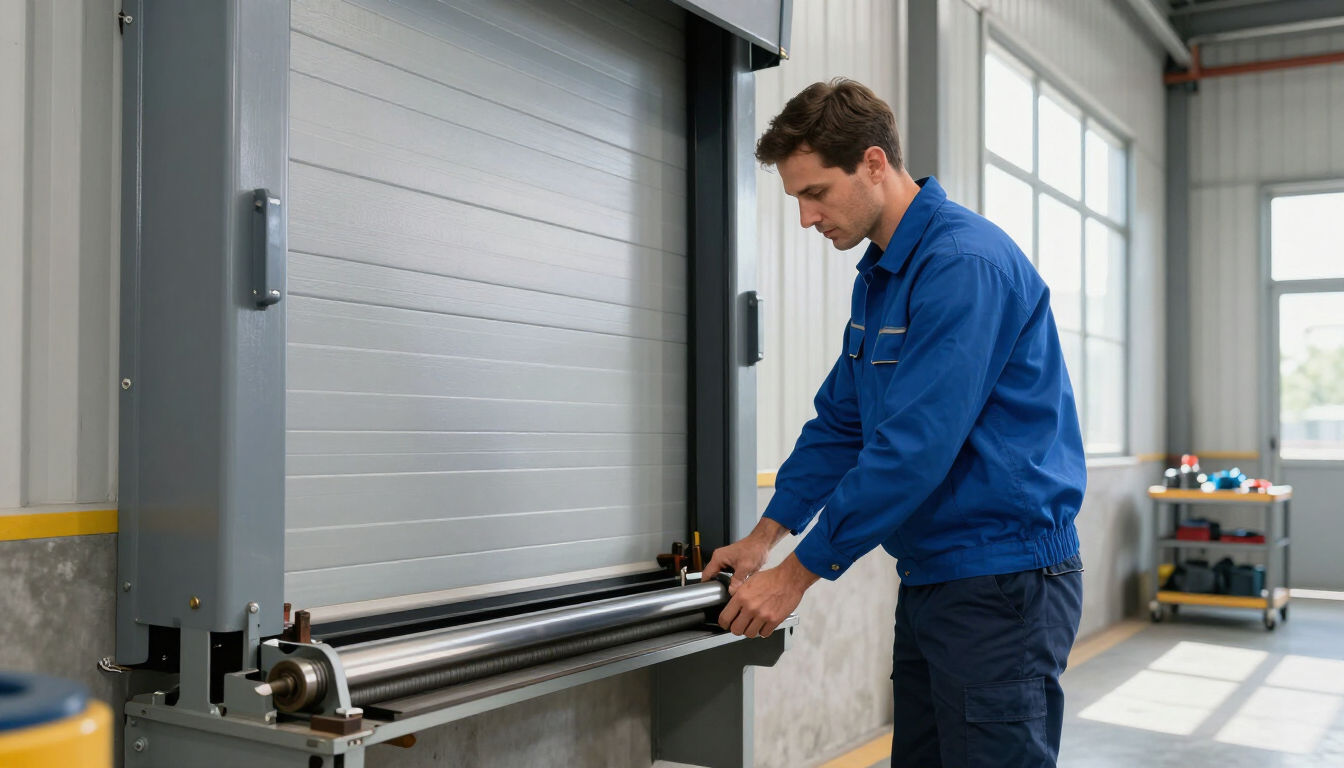
Mechanical checks: curtain, guides, rollers, seals, and fixings
Mechanical inspection focuses on the physical parts that wear and move. Common areas include the curtain condition, guide channels, roller assemblies where relevant, bottom rail condition, and all fasteners and mountings.
Seals matter too. Side seals, bottom seals, and brush strips all help control air movement and reduce contamination transfer. When seals degrade, doors can still operate, but site performance suffers.
Fixings should be checked for movement or loosening. Vibration and repeated cycles can loosen fasteners over time, especially on doors in heavy traffic areas.
Drive and control checks: motor, limits, sensors, and safety systems
High speed doors rely on a drive system and a control system. Maintenance should include checks on motor performance, control settings, limit positions where applicable, and the condition of cables and protective routes.
Sensors are critical. That includes safety photocells, presence sensors, activation loops, pull cords, key switches, and emergency stop circuits. Even if the door still opens and closes, sensor drift or damage can create unreliable behaviour, nuisance trips, or safety gaps.
A good service visit confirms that activation and safety systems operate in a consistent, predictable way.
Safety tests and functional checks
Safety testing is not optional. It is part of responsible maintenance. The checks will depend on door type and safety design, but the aim is to confirm the door stops when it should, reverses when it should, and behaves consistently.
If your site is subject to audits, insurer expectations, or internal compliance checks, service documentation should reflect that safety checks were completed and any issues were recorded clearly.
Cleaning and lubrication, and why correct materials matter
High speed doors often operate in environments that accelerate wear. Dusty warehouses, wash down areas, and temperature-controlled zones can all affect components.
Cleaning helps remove debris that causes friction and wear. Lubrication is also important, but it must be done correctly. The wrong lubricant can attract dirt, degrade materials, or cause issues with seals and plastics. This is why trained engineers matter. They know what to lubricate, what to keep dry, and what to replace rather than try to rescue.
Service reports, defect notes, and remedial recommendations
Maintenance is only useful if it produces action. A good visit ends with a clear report. That report should state what was checked, what was found, what was adjusted, and what needs remedial work.
Tridoor’s servicing content emphasises service logs and documentation, which is valuable for facilities teams that need records for audits and internal reporting.
How often should high speed doors be serviced?
There is no one-size answer. The correct interval depends on how hard the door works and what conditions it works in. The right question is not “How often do you service doors?” The right question is “What is the duty cycle, and what is the risk if this door fails?”
Cycle count and usage patterns are the main drivers
High-cycle doors in logistics sites may run hundreds or thousands of cycles per week. A door in a low-traffic corridor may run far fewer cycles. Wear follows cycles. The more cycles, the faster components reach their service limits.
If you have cycle count data from the controller, it is worth using it. If you do not, you can often estimate based on shift patterns and traffic. Maintenance should scale with usage, not with guesswork.
Environmental factors: dust, cold stores, wash down, and wind exposure
The environment changes everything. Dust and debris increase friction and wear. Wash down areas introduce moisture, and cleaning chemicals. Cold storage introduces temperature stress and sealing demands. External doors face wind load and driving rain, which affects alignment and seal performance.
In these environments, maintenance intervals often need to be tighter. It is not because the door is poorly designed. It is because the environment is harsher.
Door type differences and site-specific risk
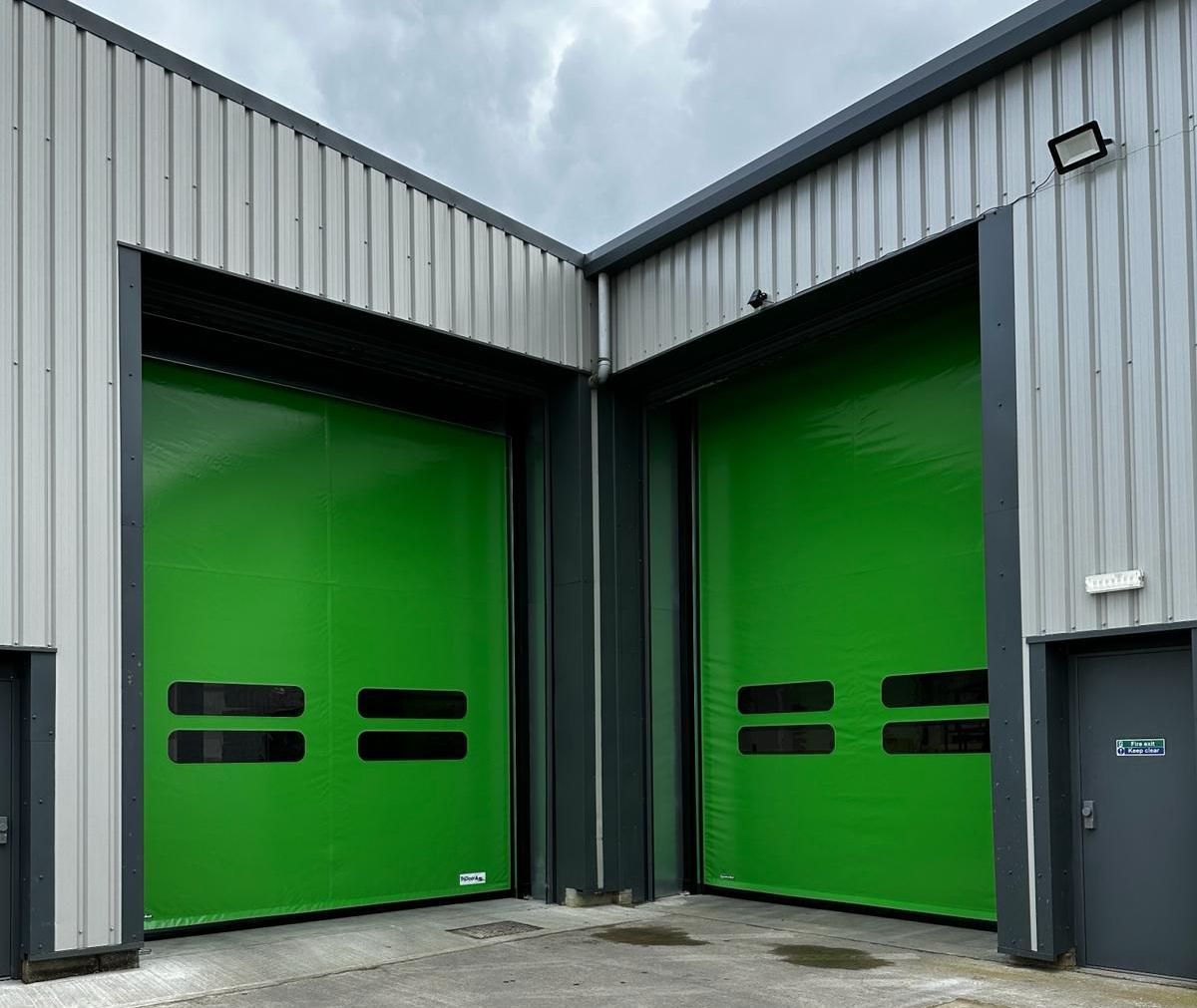
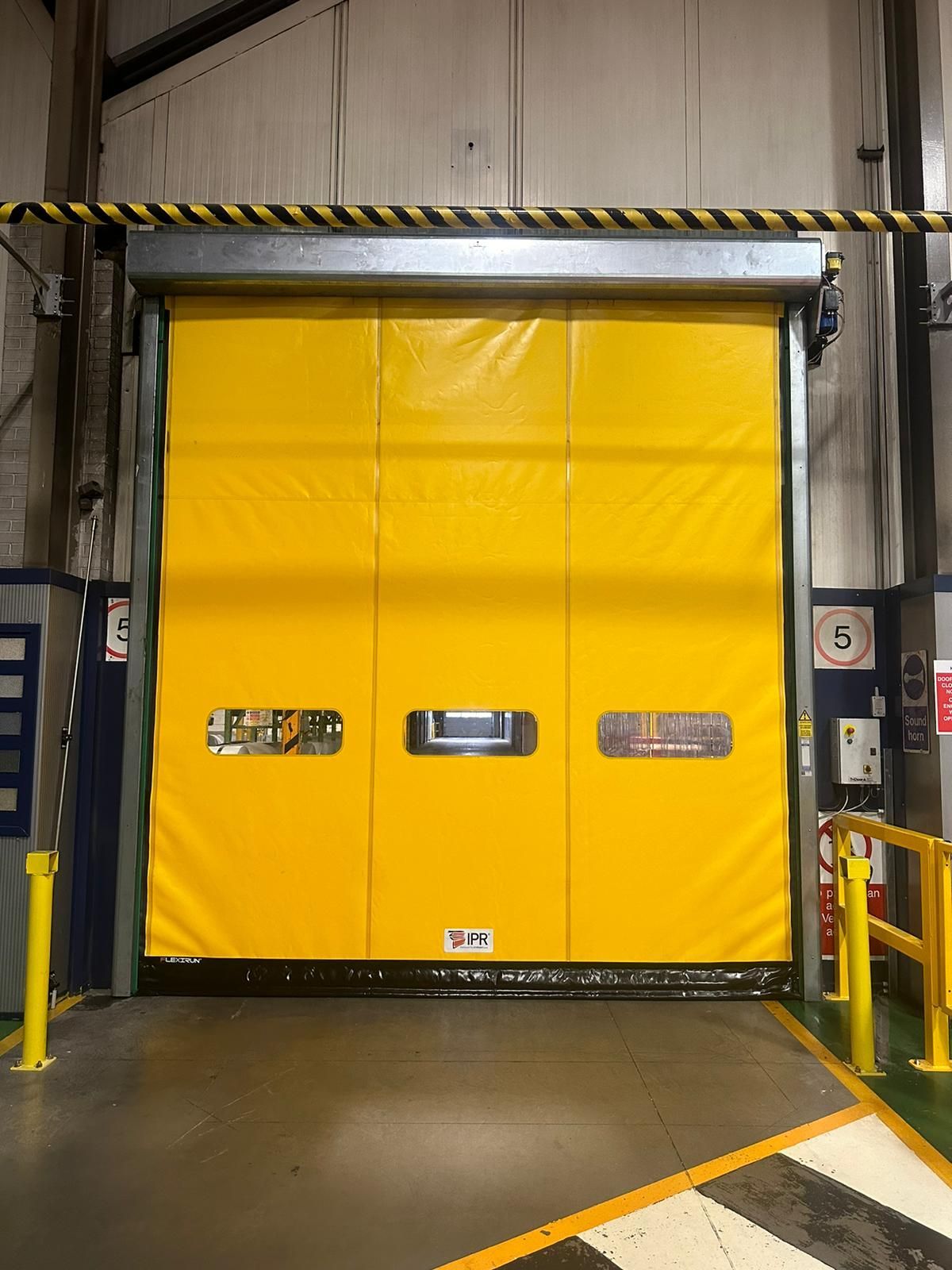
Not all high speed doors are the same. Some are fabric roll-up designs, others are rigid, and others are designed for specific hygiene or thermal needs. Each design has different wear points.
A good maintenance provider will assess door type and usage, then recommend an interval that fits the risk. If a door protects a controlled environment, failure is more costly. If a door is a key traffic route, failure is more disruptive. Those doors usually justify more frequent planned visits.
Setting a planned maintenance schedule that fits operations
The goal is to keep service visits predictable. Many sites plan maintenance around quieter periods, shift changes, or planned downtime windows.
If your business runs continuously, you may need staged servicing, where doors are taken out of service briefly one at a time. This is common in busy warehouses and production environments. A competent provider will plan access, isolation, and testing in a way that suits the site, not in a way that causes chaos.
Tridoor’s Maintenance and Repairs support and their High Speed Doors service positioning align well with this planned approach.
Common faults and early warning signs
Most breakdowns give warnings. The problem is that on busy sites, small changes are easy to ignore until the door fails.
Door not closing fully, misalignment, and tracking issues
If a door does not close fully, it can be a safety issue and a performance issue. It may point to sensor alignment problems, mechanical misalignment, worn guides, or controller settings that have drifted.
Tracking issues often start as minor rubbing or uneven movement. If ignored, they can damage the curtain, strain the drive, and lead to a stoppage.
Slower opening speed and motor strain
High speed doors are designed to open and close quickly. If you notice a door has become slower, the cause could be mechanical drag, motor strain, controller issues, or a safety system triggering unnecessarily.
Slower speed is often treated as a minor annoyance. In reality, it can be an early sign of stress that will become a fault if not addressed.
Unusual noise, vibration, or rubbing
Noise changes are a simple early warning. Rubbing, scraping, rattling, or vibration often indicates misalignment, loose fixings, worn parts, or debris in guides.
The best approach is to report it early. The earlier it is checked, the smaller the repair tends to be.
Sensor faults and nuisance stops
A door that stops, reverses unexpectedly, or refuses to close can be responding to a sensor issue. That might be a dirty photocell, damaged wiring, misalignment, or a controller fault.
Nuisance stops often lead staff to bypass safety measures. That is a risk. It is also a sign that the door needs attention.
Curtain damage and seal failure
Curtain tears, worn edges, and damaged bottom rails can happen in high-traffic environments. Seal failure can look minor but can create energy loss, hygiene issues, and increased wear.
Damage often grows quickly once it starts. Early repair is cheaper than replacement.
Control faults: remotes, key switches, and emergency stops
Controls that fail intermittently create unreliable operation. That can include key switches, push buttons, pull cords, loop detectors, and emergency stops.
Intermittent faults are hard because they disappear during inspection if you are unlucky. Good documentation helps. If your staff records time and the pattern of faults, engineers can diagnose faster.
Preventative maintenance versus reactive repairs
Reactive repairs will always exist. Doors get hit. Parts fail. Controllers develop faults. The question is how often you want those events to happen and how much disruption you can tolerate.
Preventative maintenance does not eliminate failure. It reduces frequency and severity. It also helps you control timing.
A site with no maintenance plan often ends up with repeated callouts, inconsistent documentation, and growing risk. A site with planned maintenance usually has fewer interruptions, clearer records, and better budgeting.
There is also a long-term decision point. If a door is repeatedly failing and parts are becoming harder to source, replacement may be more sensible than repeated repairs. A maintenance provider should be able to tell you when you have crossed that line and help you plan upgrades rather than waiting for a critical failure.
Tridoor supplies and maintains a range of industrial doors and can support that lifecycle decision-making rather than only responding when something breaks.
Compliance and documentation for audits and insurers
Workplace powered doors sit within a wider safety expectation. In the UK, employers have duties to maintain work equipment so it remains safe. This is where planned maintenance and documentation become important.
High speed doors should have service records that show inspections and safety checks were completed. If there is an incident, documentation becomes part of how you demonstrate that reasonable steps were taken.
Many facilities teams also face audits, either internal, customer-led, or insurer-led. Clear records reduce friction.
What records should you keep?
A simple record set typically includes service reports, defect notes, remedial work records, and evidence of completion of recommended repairs. Where relevant, you may also keep risk assessments and site-specific access plans.
If you manage multiple doors, a door asset register helps. It links each door to service history, fault history, and planned visits. This is especially valuable for mixed estates where different doors have different risk profiles.
Why documentation protects the business
Documentation is not about paperwork for its own sake. It is about evidence. It shows that maintenance was planned, faults were addressed, and safety checks were not ignored.
Tridoor’s content on the value of regular industrial door servicing aligns with this need for documented planned maintenance, particularly for businesses that want to reduce risk and improve operational continuity.
Choosing a high speed door maintenance provider
A good provider is not only a repair company. They are a maintenance partner. The difference shows up in planning, reporting, and how faults are prevented, not just fixed.
Coverage across mixed door estates
Many sites have more than one door type. High speed doors, roller shutters, fire shutters, sectional doors, and pedestrian doors may all be present. A provider that can service a mixed estate reduces complexity and allows a consistent documentation approach.
Tridoor’s broader industrial door expertise supports this, with service and repair capability across multiple door types.
Response times and parts readiness
Response time matters when a door failure blocks workflow. However, response is not only speed. It is also diagnosis and parts readiness. A provider that understands common failure points and holds suitable parts can reduce downtime.
Engineer competence and safety testing approach
High speed doors are powered equipment. Safe maintenance requires competence. You should expect engineers to follow safe isolation practices, complete functional tests, and record outcomes properly.
What a good maintenance contract should include
A good maintenance agreement should clearly state visit frequency, what is included, what is excluded, how remedial work is quoted, how emergency callouts are handled, and what documentation you receive.
It should also be flexible enough to adjust frequency for high-cycle doors, harsh environments, or seasonal peaks.
High speed door maintenance with Tridoor
Tridoor provides high speed doors and supports ongoing maintenance and repairs as part of a full lifecycle service model. Their Maintenance and Repairs offering is positioned around keeping doors operational and safe through inspection, servicing, and planned upkeep.
For facilities teams, the advantage is having a provider that can supply, maintain, and repair across an industrial door estate, not only one door type. That supports consistent documentation, clearer planning, and fewer gaps in coverage.
Tridoor is based in Barnsley with strong Yorkshire coverage, and they support businesses that need reliable engineering support and practical service planning.
What a service visit looks like
A typical service visit starts with inspection and functional checks, then moves into adjustments, cleaning, lubrication where appropriate, and identification of wear parts. The visit should end with a written report that records what was done and what needs follow up.
If the door has an active fault, the visit may include diagnostic work and a repair plan. If parts are needed, the report should make that clear and give you the next steps.
How to book and what to have ready
To book efficiently, it helps to know the door location, door type, and any recent fault behaviour. If you have cycle count information or fault codes, that can speed up diagnosis.
If you are looking for a planned maintenance programme, it helps to provide a rough count of doors on site and the operating environment for each. That allows a service plan that matches risk, rather than a generic schedule.
The next step is to contact Tridoor through their Contact page and request a maintenance visit or a planned service proposal. You can also review their High Speed Doors page for product context and their servicing content for the business case for regular inspections.
FAQ
How often should a high speed door be serviced?
Servicing frequency depends on cycle count, operating environment, and the impact of failure. High-cycle doors in busy logistics sites typically need more frequent visits than low-use doors in quiet areas. A provider should recommend a schedule based on usage and risk rather than applying one interval to every site.
What is included in high speed door maintenance
Maintenance usually includes mechanical inspection, drive and control checks, safety function checks, cleaning, lubrication where appropriate, and a service report with defect notes and remedial recommendations. The exact checklist depends on door type and site conditions.
Why does my high speed door keep faulting
Repeated faults often point to an underlying issue such as misalignment, sensor problems, poor sealing, impact damage, controller settings, or wear in moving components. A structured maintenance visit can identify the root cause and reduce repeat callouts.
Can you service high speed doors from other manufacturers?
Many maintenance providers can service a range of door brands, especially on sites with mixed estates. Tridoor’s maintenance positioning includes a broad service capability across industrial door types, which supports multi-brand site needs.
How long does a high speed door service visit take
Time depends on door type, door condition, access, and whether faults are present. A routine service is usually shorter than a visit that involves diagnostics and repairs. A good provider will plan visits around site operations to minimise disruption.
What documents should we keep for door servicing and compliance
Keep service reports, defect notes, records of remedial repairs, and evidence that safety checks were completed. For larger sites, an asset register that tracks service history and fault history is also useful for audit readiness and planning.
Reduce downtime and risk with a planned service programme
High speed door maintenance is about keeping operations moving. It protects workflow, supports environmental control, and reduces the risk of faults escalating into downtime and safety issues. The best results come from a planned approach that matches servicing frequency to cycle count, environment, and business impact.
If your doors are faulting, slowing down, making new noises, or causing disruption, the right time to act is now, before a breakdown forces the issue. Tridoor supports high speed door maintenance and repairs with a practical service approach, clear documentation, and engineering support based in Barnsley with strong Yorkshire coverage.
To reduce disruption and build a planned service schedule for your site, contact Tridoor to book a maintenance visit or request a planned maintenance proposal.