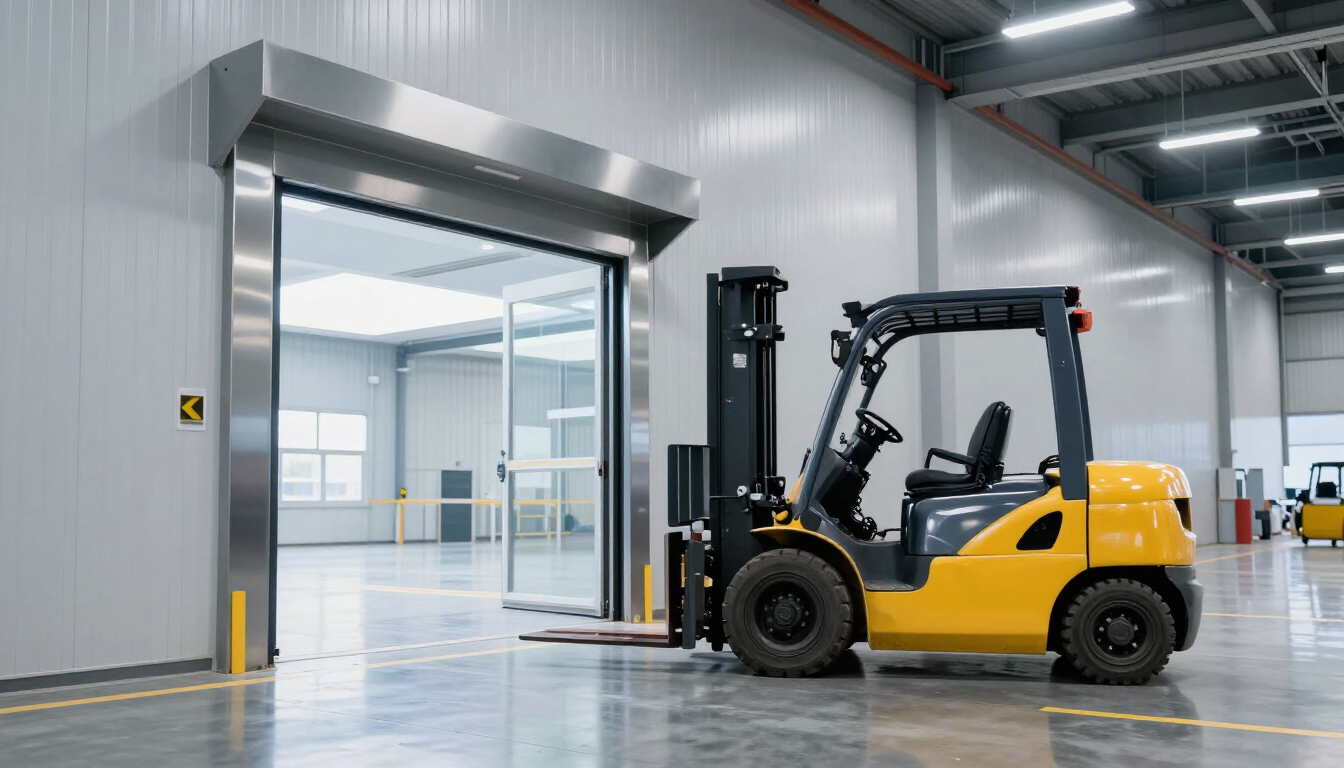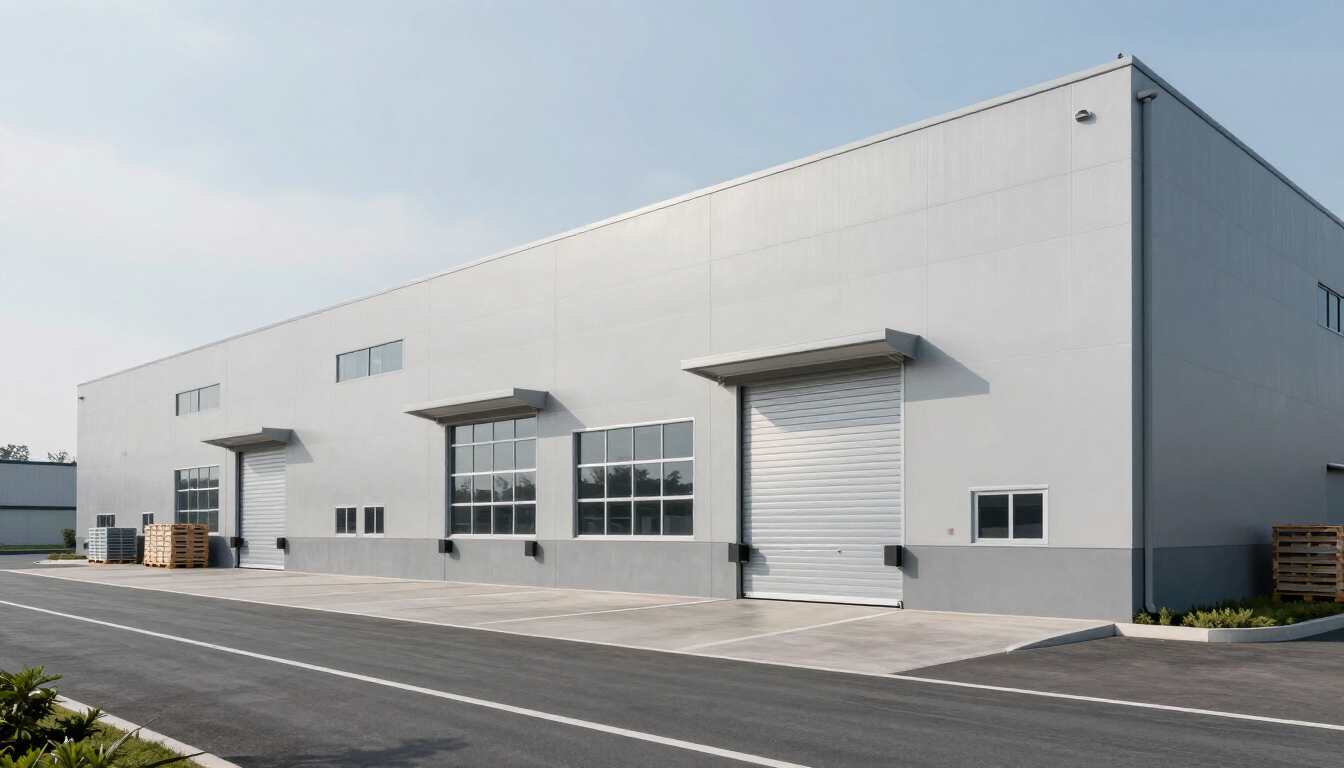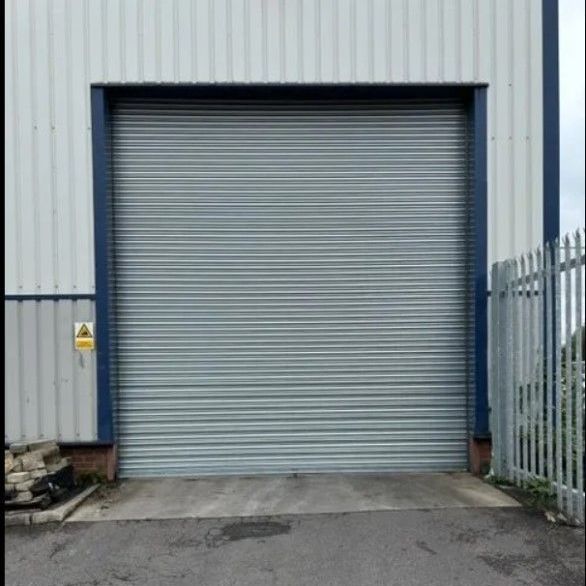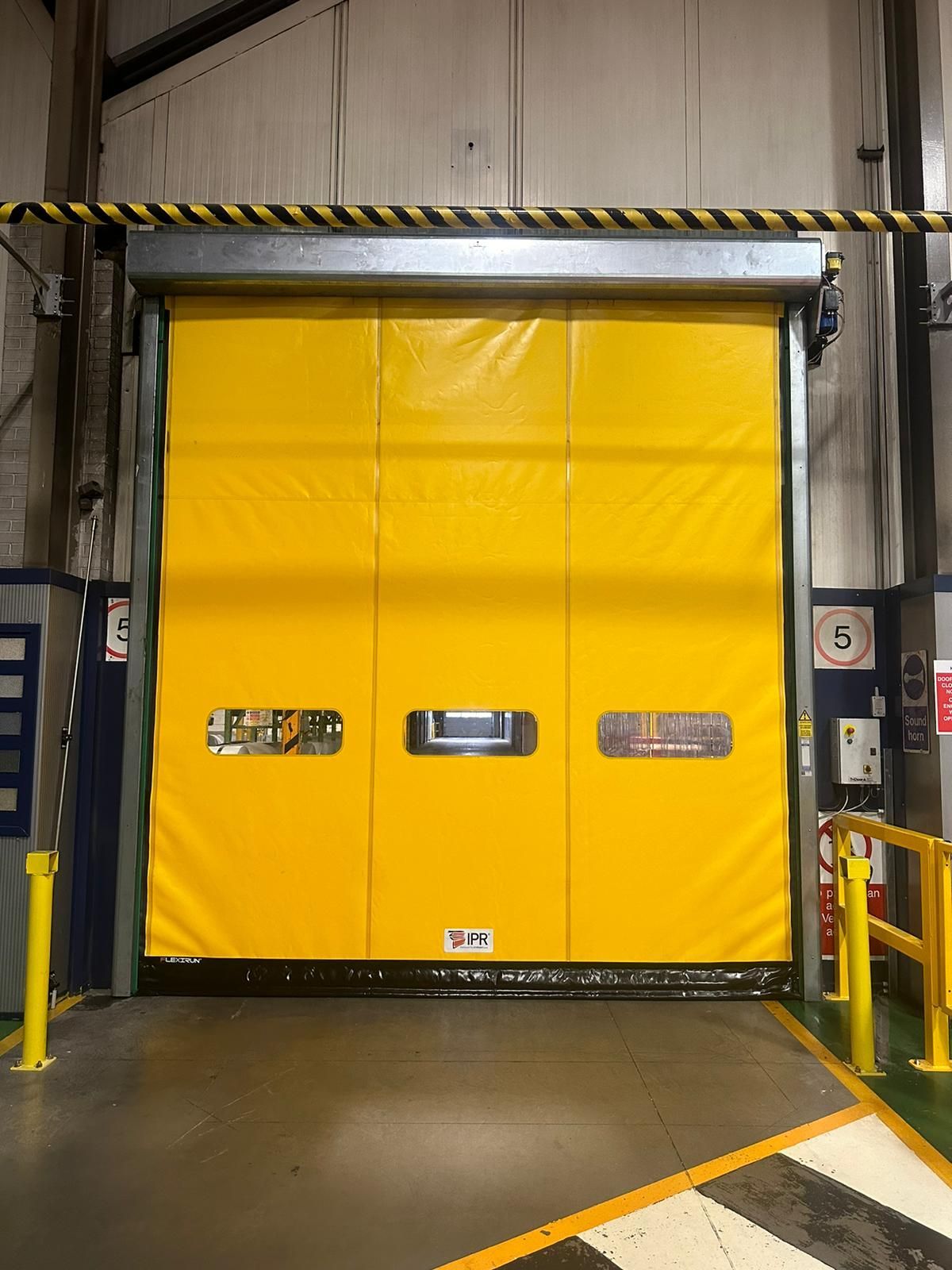

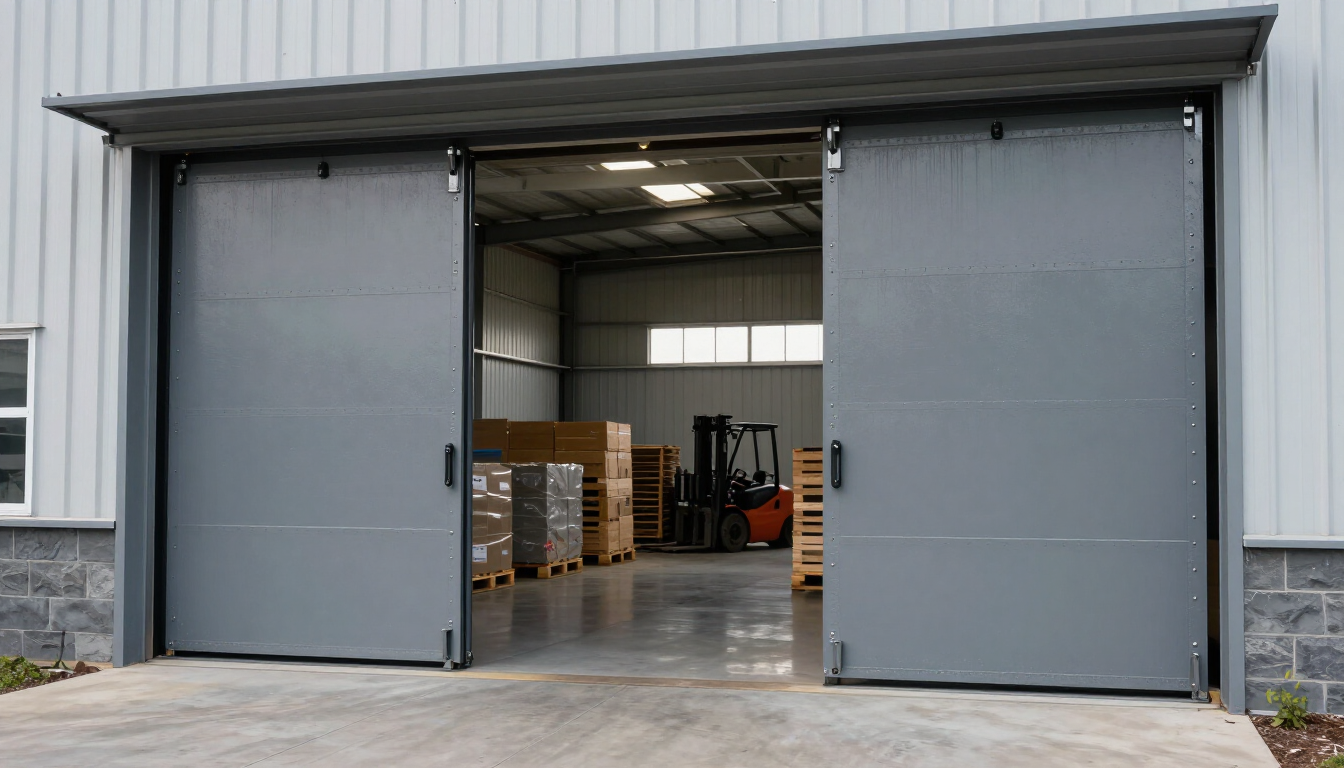
When a building has a wide opening but limited headroom, selecting the right industrial door can be challenging. Overhead sectional and roller shutter doors rely on space above the opening for tracks or barrel assemblies, making them less suitable where roof structures, cranes, heritage features, or existing services restrict installation.
Sliding and folding industrial doors provide an effective alternative. By moving horizontally rather than vertically, they maximise usable opening height while accommodating challenging structural conditions. They are widely used in agricultural buildings, aircraft hangars, industrial facilities, warehouses, and specialist commercial properties where conventional overhead systems may not be practical.
This guide explains when sliding and folding doors are the preferred solution, how different track systems operate, and the key considerations for safety, automation, maintenance, and long-term performance.
Why choose sliding or folding doors?
Where sufficient headroom exists, sectional overhead doors often provide excellent insulation and compact operation. However, sliding or folding systems are frequently better suited when structural constraints limit vertical clearance.
Typical applications include:
- Wide-span openings where overhead systems become impractical.
- Buildings with limited headroom due to roof trusses, cranes, or services.
- Heritage properties where external shutter boxes or overhead tracks would affect appearance.
- Agricultural and aviation facilities exposed to high wind loads.
- Industrial premises requiring maximum clear opening height.
Because these doors travel sideways instead of upwards, they preserve available height while reducing the need for extensive overhead structural support.
Common track configurations
Selecting the correct track arrangement is essential for smooth operation and durability.
Top-hung sliding systems
The door's weight is carried by an overhead track while bottom guides maintain alignment. This arrangement provides a clean floor finish with minimal obstruction and is well suited to facilities with frequent vehicle traffic.
Bottom-rolling sliding systems
Heavy-duty wheels run on a ground-mounted rail with an upper guide providing stability. This option is particularly useful where the building structure cannot support suspended loads.
Bi-folding doors
Folding leaves hinge together and stack neatly at each side of the opening, reducing the lateral space required compared with full sliding doors. They are often selected for aircraft hangars, agricultural buildings, and workshops where maximising the clear opening is important.
Multi-panel sliding systems
Multiple narrower leaves stack against one or both sides of the opening, offering flexibility for exceptionally wide entrances while reducing the parking space required.
For exposed environments, galvanised steel components, corrosion-resistant hardware, sealed bearings, and debris-tolerant guides help maximise reliability and service life. Tridoor manufactures bespoke industrial doors tailored to these conditions.
Manual or automated operation
The appropriate operating method depends on door size, usage frequency, and operational requirements.
Manual operation
High-quality rollers and bearings allow many sliding doors to move surprisingly easily, making manual operation suitable for lower-cycle applications.
Assisted operation
Chain or crank mechanisms reduce effort for heavier installations while avoiding full automation.
Powered systems
Electric operators are generally recommended for:
- Very large door leaves.
- Frequent daily use.
- Sites requiring controlled opening speeds.
- Facilities using access control systems or remote operation.
Automated doors can integrate with safety edges, photocells, induction loops, remote transmitters, and building management systems while providing smooth soft-start and soft-stop functionality.
Designing for wind resistance and durability
Wide industrial doors present significant surface area to wind loading, making structural design particularly important.
Performance can be enhanced through:
- Rigid insulated or steel-framed panel construction.
- Heavy-duty trolley systems and guide mechanisms.
- Anti-derail devices and reinforced hinges.
- Effective perimeter sealing without excessive operating resistance.
- Secure latching systems to prevent movement when parked or closed.
On exposed sites, dividing a large opening into independently operated sections can reduce wind loading while providing greater operational flexibility.
Incorporating pedestrian access
Opening a full industrial door simply to allow staff through increases wear and reduces energy efficiency.
Many installations benefit from either:
- An integrated personnel access door built into the main leaf.
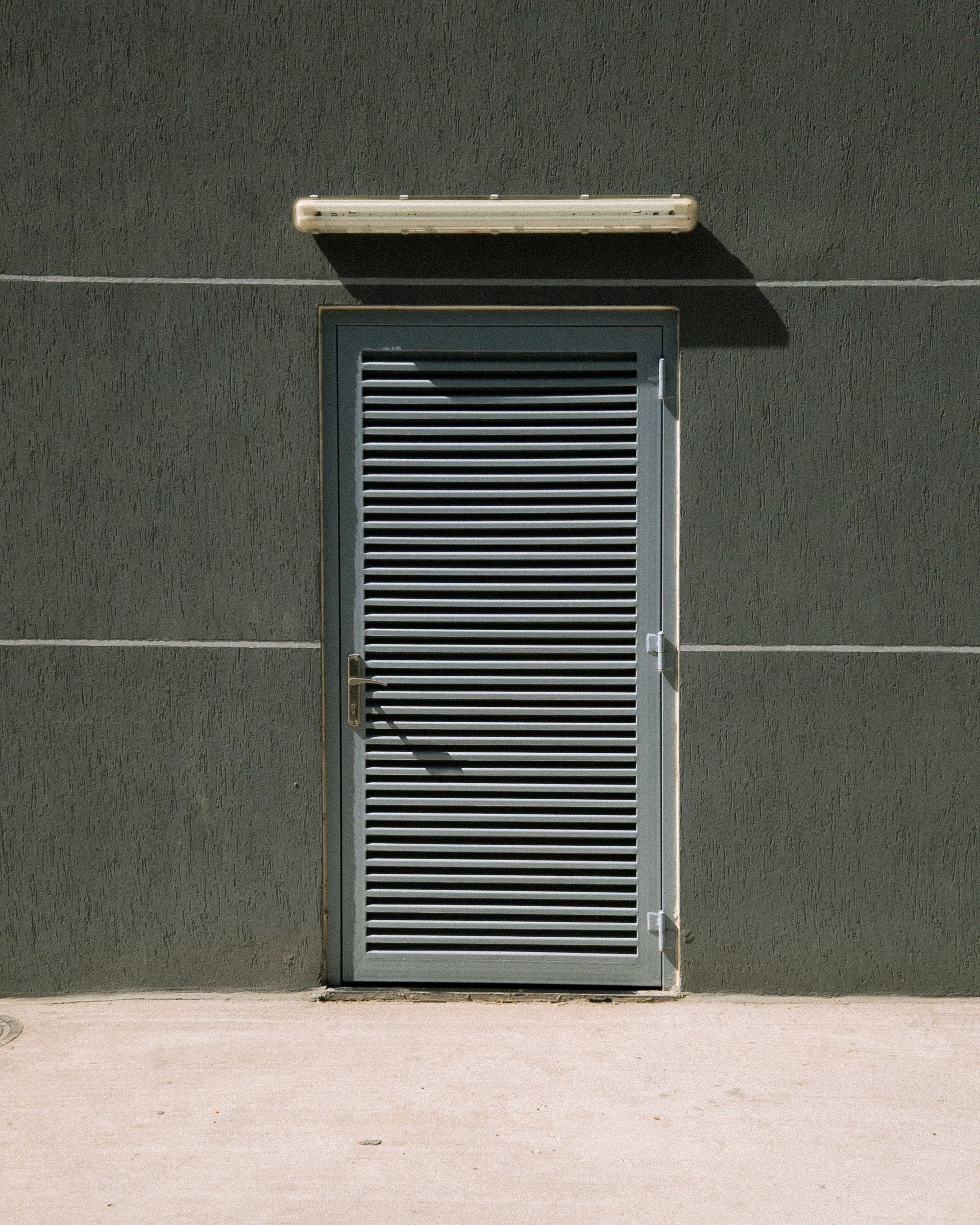
- A separate adjacent steel personnel door designed specifically for pedestrian use.
Where vehicles and pedestrians share access routes, clearly marked walkways, physical barriers, and appropriate signage help improve site safety.
Safety features for powered doors
Modern powered industrial doors should incorporate suitable safety systems appropriate to their design and operation.
These may include:
- Pressure-sensitive safety edges.
- Photocells or light curtains.
- Presence detection systems.
- Hold-to-run controls where appropriate.
- Emergency stop functions.
- Manual override capability during power failure.
Commissioning should include testing and documentation to verify safe operation and regulatory compliance.
Maintenance considerations
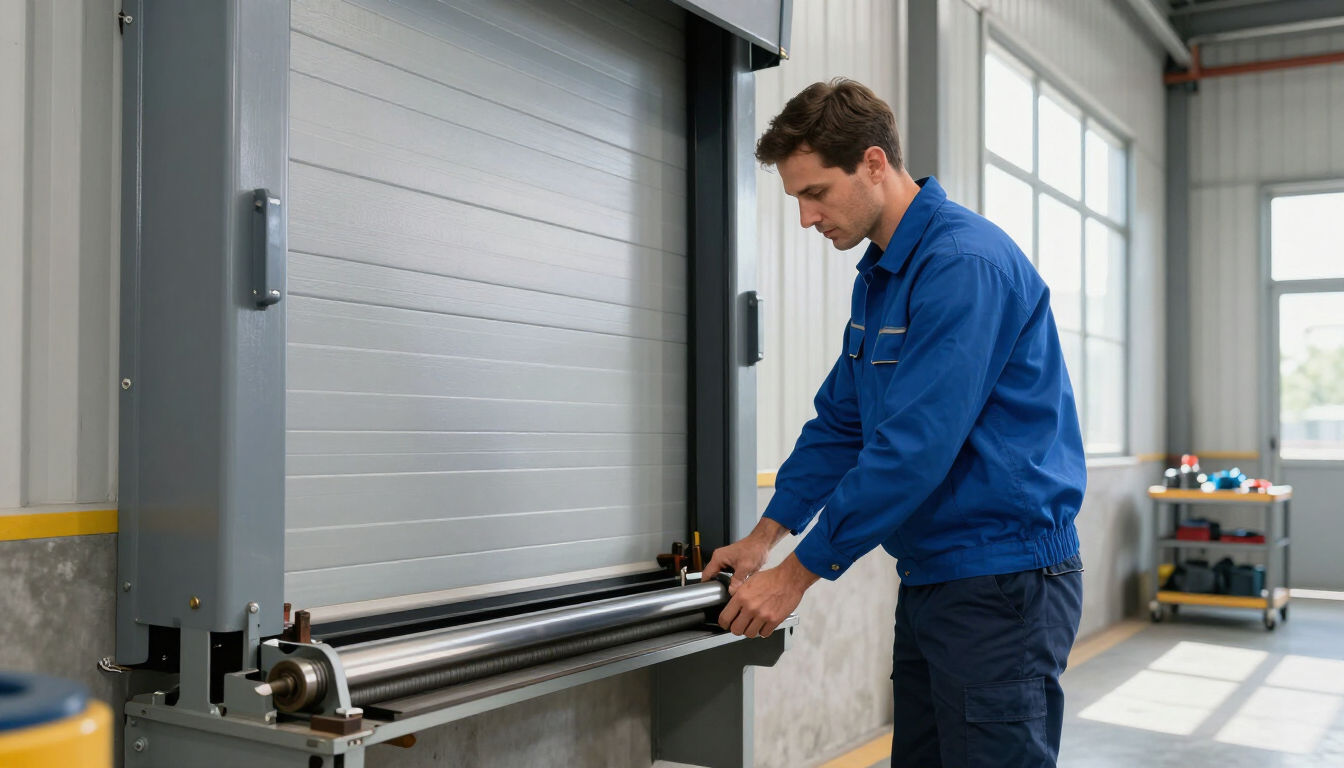
Routine maintenance helps maximise reliability while reducing downtime and unexpected repair costs.
Recommended servicing typically includes:
- Lubricating rollers, hinges, pivots, and bearings.
- Inspecting tracks for debris or damage.
- Testing safety devices and control systems.
- Examining weather seals and locking mechanisms.
- Checking emergency release functions.
- Verifying alignment and fixing integrity.
Inspection frequency should reflect usage levels, environmental conditions, and manufacturer recommendations.
Comparing sliding and folding doors with sectional vs roller shutter doors
Each industrial door type has distinct strengths.
Sliding and folding doors
- Excellent for wide openings with restricted headroom.
- Suitable for heritage buildings and unusual structures.
- Can accommodate very large spans.
- Offer flexible manual or powered operation.
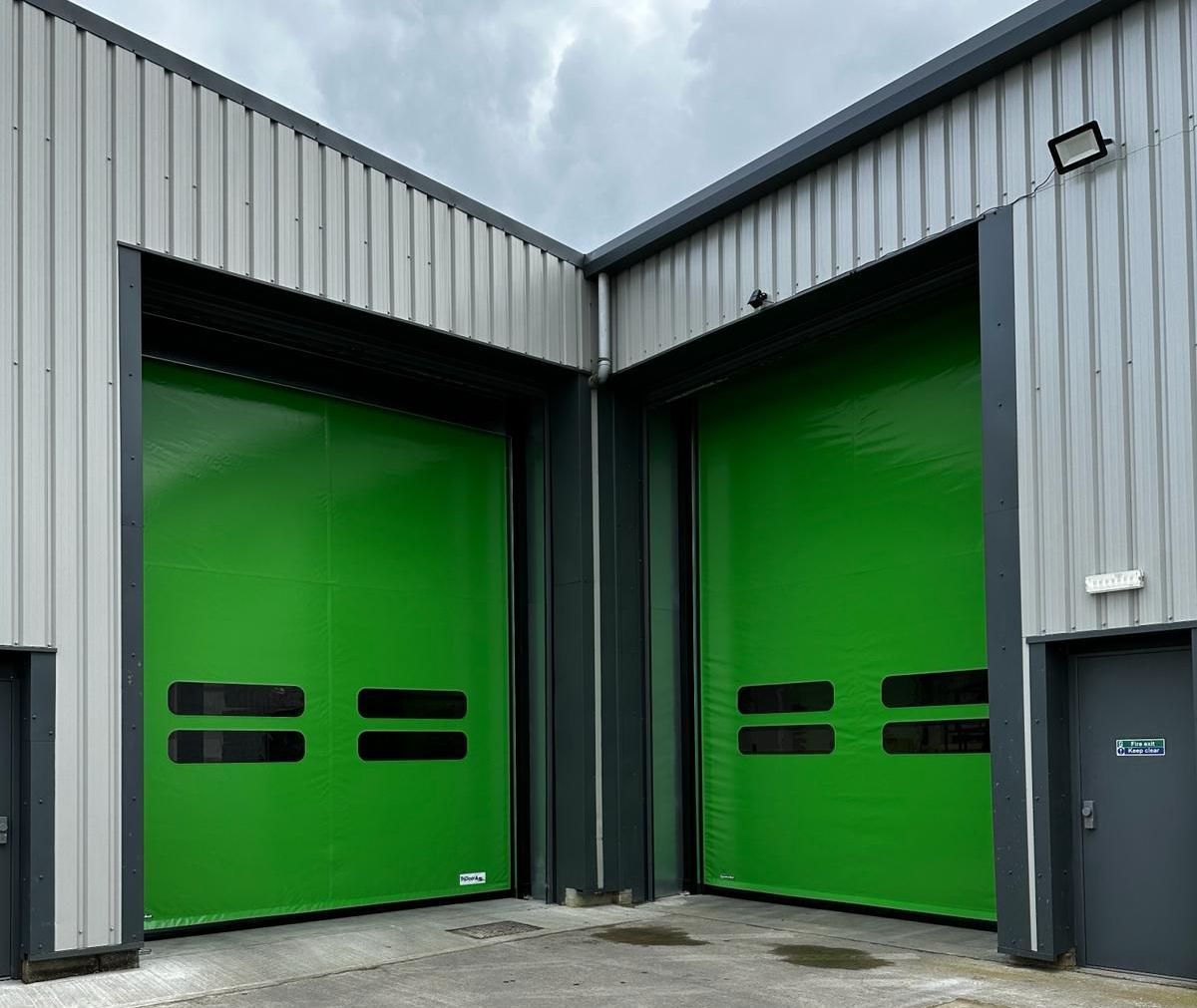
Sectional overhead doors
- Provide strong thermal insulation.
- Deliver excellent weather sealing.
- Require sufficient headroom and structural support above the opening.
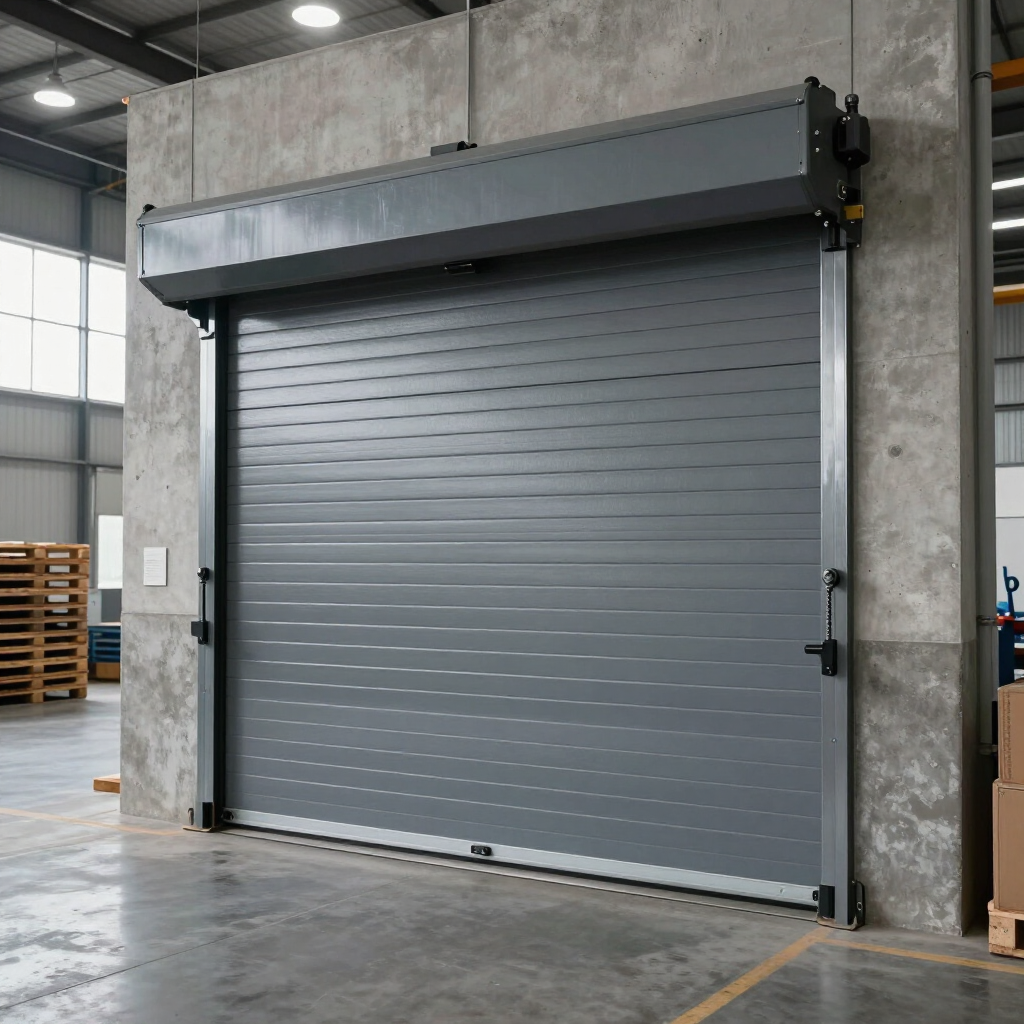
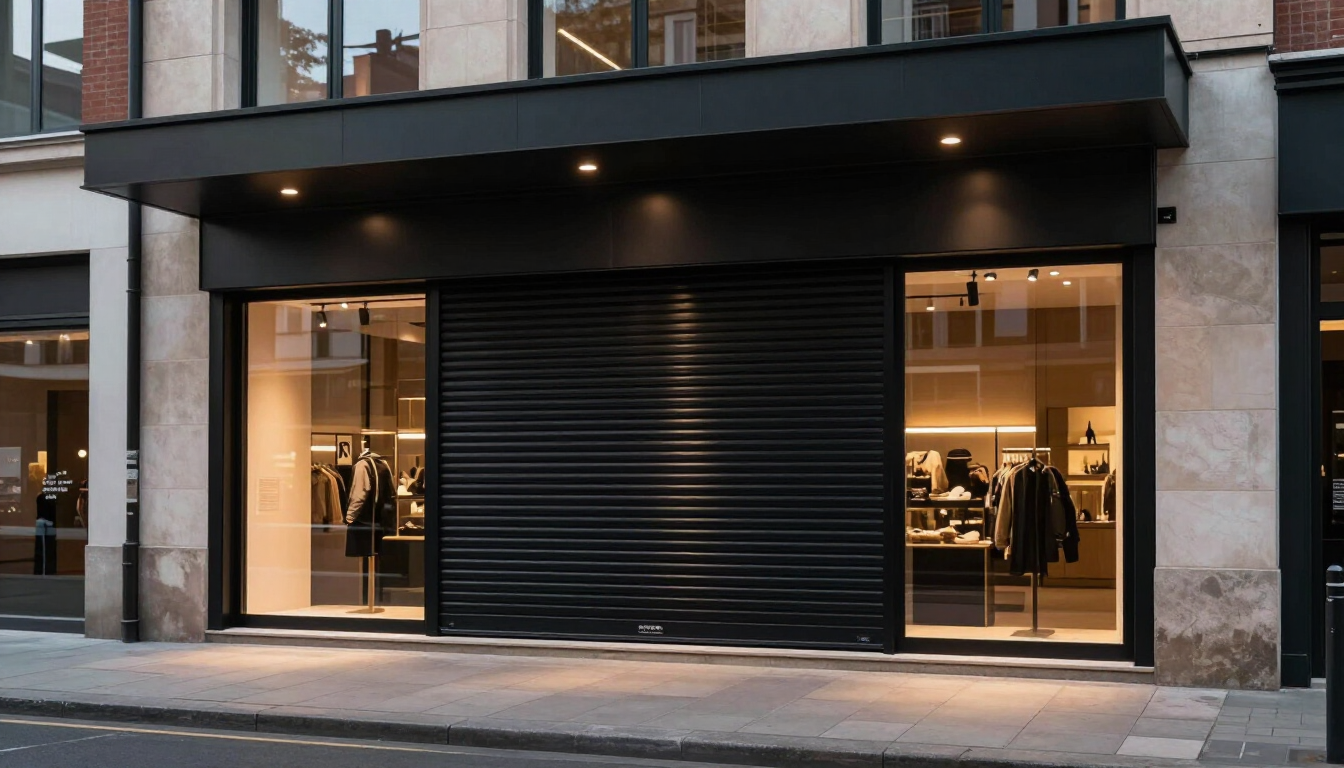
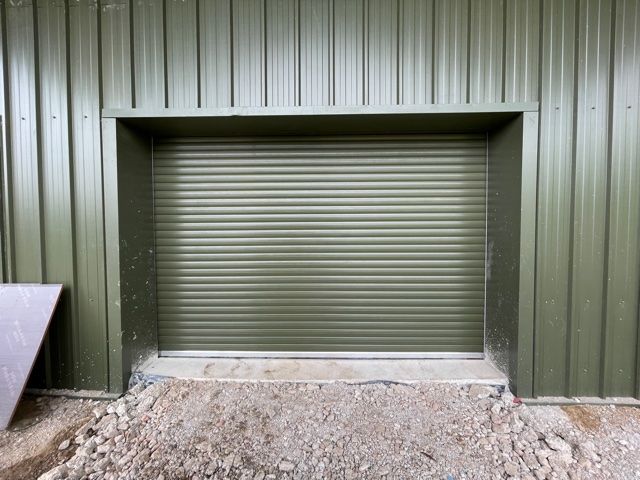
Roller shutter doors and roller shutters
- Occupy minimal internal space when open.
- Available in insulated and fire-rated configurations.
- May become less practical for extremely wide openings due to barrel size and wind loading considerations.
The most appropriate choice depends on building geometry, operational requirements, and available installation space.
Frequently Asked Questions
What size is a typical commercial door?
Personnel doors commonly measure approximately 900–1,000 mm wide and around 2,100 mm high, while industrial vehicle openings vary significantly depending on their intended use and are often manufactured to bespoke dimensions.
What sizes are available for roller shutter doors?
Roller shutters are typically made to measure rather than produced in fixed standard sizes. For residential needs, we also provide insulated roller garage doors. Dimensions depend on structural requirements, wind loading, and operational needs.
What are the disadvantages of roller shutter doors?
For very wide openings, larger barrel sizes and increased wind loading may affect practicality. They also require sufficient headroom to accommodate the rolled curtain and supporting components.
Final thoughts
Where headroom is restricted but opening widths are substantial, sliding and folding industrial doors often provide the most practical and structurally efficient solution. Their horizontal operation preserves valuable clearance, accommodates complex buildings, and offers flexible configurations for demanding commercial and industrial environments.
By selecting the appropriate track arrangement, automation level, safety features, and maintenance programme, businesses can achieve reliable long-term performance while maximising accessibility and operational efficiency. See our testimonials or contact us today.